

Invar® 36 alloy is the original controlled-expansion alloy and remains the standard reference material for designs that require near-zero dimensional change across moderate temperature swings. Multiple producers manufacture this same nominal alloy under different registered names, including Free-Cut Invar “36”® Alloy, Invar 36® Alloy, NILO® 36, Pernifer® 36, and Invar® Steel.
EFINEA stocks Invar material in plate, sheet, round bar, and rod across two grades: standard Invar 36 (UNS K93603) and Free-Cut Invar “36”® Alloy FM (UNS K93050), the free-machining variant developed for round bar applications. Engineers across aerospace, electronics, semiconductor, and scientific instrumentation specify Invar 36 alloy when ordinary structural alloys cannot meet the dimensional stability requirements of the program. The chemistry and properties are essentially identical across these names, and material supplied to ASTM F1684 will meet the same composition limits regardless of mill or trade name.
For questions about whether Invar 36 alloy fits your design, our sales engineers and metallurgists are reachable at 800-348-6268.
Invar® 36 Alloy Forms Available from EFINEA
EFINEA stocks Invar 36 alloy in three primary wrought forms: plate, sheet, and round bar or rod. Each form supports a different family of applications, and all stock material ships with full mill certification traceable to the original mill.

Invar® 36 Alloy Plate
Invar 36 plate is available in standard thicknesses, with custom cutting available through in-house waterjet, shearing, and saw services. EFINEA supplies plate to ASTM F1684, AMS I 23011 Class 7, and UNS K93603; MIL I 23011 Class 7 has been deactivated and replaced by AMS I 23011 Class 7, which should be referenced on current drawings.
Invar® 36 Alloy Round Bar and Rod
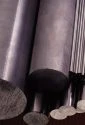
Round bar and rod are available in standard diameters, with custom sizes available from the mill. For applications requiring extensive machining, EFINEA recommends Free-Cut Invar “36”® Alloy FM, which contains a controlled selenium addition of approximately 0.2% to improve chip break and tool life while maintaining the alloy’s Invar Effect.

Invar® 36 Alloy Sheet
Invar 36 sheet is available in standard gauges to ASTM F1684, with custom slitting and shearing available for narrow-width strip and part blanks. EFINEA stocks standard sheet sizes and can provide custom dimensions to meet specific size and fabrication requirements. The material offers the controlled thermal expansion characteristics expected from Invar 36 across a range of temperatures.
Why Choose EFINEA Metals as Your Invar® Supplier
EFINEA Metals has supplied controlled-expansion alloys to high-technology industries since 1965. As an Invar material supplier with inventory across four ISO 9001:2015 and AS9100D-certified facilities in New Jersey and California, EFINEA ships standard stock within 24 hours of order confirmation.
- AS9100D and ISO 9001:2015 quality systems with full lot traceability on every shipment
- Four warehouse and processing locations across New Jersey and California, each designed to prevent environmental damage to inventory
- In-house precision cutting, shearing, slitting, and waterjet services for prototype quantities and production runs
- Mill certifications included with every order, documenting heat and lot numbers, chemical composition, mechanical properties, and any applicable inspection results
- On-staff metallurgists and sales engineers for grade selection, specification interpretation, and fabrication guidance
- More than 60 years supplying specialty metals, with deep coverage on Invar and the broader controlled-expansion alloy family
As an Invar alloy and free machining Invar supplier, EFINEA accepts orders of any size, from single-plate research quantities through production runs.
What Is Invar® 36 Alloy?
Invar® 36 alloy is a binary iron-nickel alloy with a nominal composition of 36% nickel and the balance iron. Composition is held to tight tolerances under ASTM F1684 because the low thermal expansion behavior is highly sensitive to nickel content. Drift away from the 36% target shifts the inversion temperature and degrades dimensional stability through the working range.
The defining property is the Invar Effect: below the Curie temperature of approximately 279°C, the alloy’s expansion coefficient is roughly one-tenth that of carbon steel and lower than any other known alloy in the same temperature window. The behavior comes from magnetostrictive contributions that offset normal thermal expansion in the ferromagnetic state.
Once the alloy passes through the Curie point on heating, the matrix becomes paramagnetic, and the expansion coefficient climbs back toward typical structural values. The narrow operating window below 200°C is what designers must respect when specifying Invar 36 alloy for precision applications.
Invar® Properties and Applications
For full property tables (thermal expansion coefficient by temperature range, physical and mechanical property data, chemistry, and specifications for Invar material) and detailed application coverage across aerospace, cryogenic service, optical instrumentation, telecommunications, and electrical power equipment, see our dedicated Invar Material Properties, Applications, and Specifications page.
The short version: Invar 36 alloy holds dimensional stability across cryogenic and moderately elevated temperatures. The alloy machines slowly but reliably, with substantially better chip behavior in the Free-Cut variant, and provides corrosion resistance comparable to mild stainless in atmospheric service.
For machining guidance specific to controlled-expansion alloys, see our Machining Guide for Controlled Expansion Alloys. For comparison of Invar against other controlled-expansion alloys EFINEA stocks, see our Thermal Expansion Table.
The Discovery and History of Invar®
Invar was discovered in 1896 by Charles Édouard Guillaume, a Swiss physicist working at the International Bureau of Weights and Measures. Guillaume was investigating nickel-iron alloys in search of a cost-effective metal that would not change length under normal temperature variation.
In the course of those experiments, Guillaume found that the coefficient of thermal expansion of nickel-iron alloys dropped sharply as nickel content approached 36%, reaching a minimum that no other alloy could match. He named the material “invariable,” and the shortened form Invar stuck. The discovery transformed precision instrument design across surveying, metrology, telecommunications, and aerospace.
Guillaume was awarded the Nobel Prize in Physics in 1920 for the discovery and the broader work on nickel-steel alloys. He remains the only scientist to receive the Nobel Prize for a metallurgical achievement.
Frequently Asked Questions About Invar Material
Yes. Invar 36 is readily welded by GTAW (TIG), GMAW (MIG), electron beam, and resistance welding processes, and weld filler metals matching the parent chemistry are commercially available. As with other low-expansion alloys, weld procedures should control heat input and interpass temperature to minimize segregation and preserve the dimensional stability of the joint. Post-weld stress relief is sometimes specified for parts where residual stress could affect long-term dimensional behavior.
Invar 36 is not heat-treatable in the traditional sense of strengthening through phase transformation. The alloy is a single-phase austenitic iron-nickel solid solution at all service temperatures. Annealing for dimensional stability typically involves heating to approximately 815°C (1500°F), water quenching, and a lower-temperature temper at 315°C (600°F). A simpler low-temperature stress relief at 316–371°C (600–700°F) is also used between rough and finish machining operations. Refer to the supplier data sheet or consult an EFINEA metallurgist for program-specific recommendations.
Store Invar 36 indoors in a dry environment to prevent surface corrosion. The alloy is not stainless and will develop light surface rust if exposed to humid conditions or condensation. For long-term storage, light oil coatings or VCI packaging are typical. Each of EFINEA’s four warehouse locations is purposefully designed to prevent environmental damage to inventory before shipment.
Invar® is a registered trademark of Aperam Alloys Imphy, France
CarTech® Invar 36 Alloy® is a registered trademark of CRS Holdings Inc., USA
Free-Cut Invar® “36” is a registered trademark of CRS Holdings Inc., USA
NILO® is a registered trademark of Special Metals Corporation, USA.
Pernifer® is a registered trademark of VDM Metals GmbH, Germany